
Customer Scenario Example
Below are the examples of how we could support your growth across maturity stages and industries.




Category Based on Company Maturity Stage

Startup
Scenario: Founder-led team lacks structured planning
Challenges:
- No financial forecast & budget
- No clarity on cost drivers
- No clear operation process and strategy
- No quarterly reporting discipline
What we help with:
- Budget model
- Pricing and customer strategy
- Quarterly review
- Operation advisory
Ideal outcome: The startup becomes more structured, ready for scaling, with a clear and agile workflow.

Scale-up
Scenario: Company is growing too fast and lacks operational clarity
Challenges:
- Startup styled operation no longer works for the increasing business scope
- No unified metrics
- Increasing need for forecast and performance management
- Multiple new business opportunities but unclear ROI
What we help with:
- Business Review
- Operational Capacity Model
- Investment Case
- Operation Workflow Redesign
Ideal outcome: The scale-up runs more efficiently, aligns team with data, and makes confident strategic decisions and investment

Mature
Scenario: Business performance plateaus and leadership needs deeper insights
Challenges:
- Want to review which channel or products to optimize
- Needs standardised portfolio and process
- Has outdated pricing
- Requires annual strategic planning
- May be preparing for acquisition or new investment
What we help with:
- Annual Review
- Operational Workflow Audit
- Product / Service Standardisation Audit
- Budget Reallocation Case
- Forecasting Model
Ideal outcome: The company improves profitability, reduces operational complexity, and prepares for long-term stability or investment cases.
Example 1: Health, Beauty & Wellness Chains – Skin Clinic Chain
(Salon, Physio clinic, Massage studio, Gym, Treatment center, etc)
Scenario: Growing clinic seeking clarity for expansion
A growing skin clinic is preparing to open a new clinic in another city, and introduce several new treatment services. However, the team lacks reliable data and insight analysis, and facing the following challenges:
- Expansion decisions (new services, room, location, or staff) feel risky because financial impact and projections are unclear
- Unclear price strategy, unable to position themselves among their competitors
- Lack of competition landscape in the new city for the potential new site
- They want to launch new treatments but don’t know the expected ROI
- They are unsure how each treatment category contributes to revenue and margin
- Their existing data lives in multiple spreadsheets, making it hard to see full picture across all their sites
How we Help:
- Conduct local Market Research to assess demand, competition, and pricing benchmarks.
- Based on existing sales data, build a Pricing Model for new services’ cost, margin, and customer willingness to pay.
- Create a full Investment Case evaluating expected revenue, expenses, break-even timeline, and ROI for the new clinic.
- Develop a Sales Forecast Model using existing sales data to get seasonal impact and service mix assumption.
- Provide a 12 month rolling Budget Model together with sales performance dashboard to track actual performance accordingly.
- Provide a Quarterly Review to monitor early performance and adjust strategy.
Outcome:
The skin clinic receives a clear, data-backed assessment showing that expansion into the new city is viable, supported by a comprehensive competitor landscape and strong potential customer volume. The pricing model reveals that lowering prices by 5% for the new services will maximise demand without hurting margins. With the financial and operational projections in place, management moves forward confidently, knowing the new clinic is expected to reach break-even by Q3 next year, under the proposed budget plan.

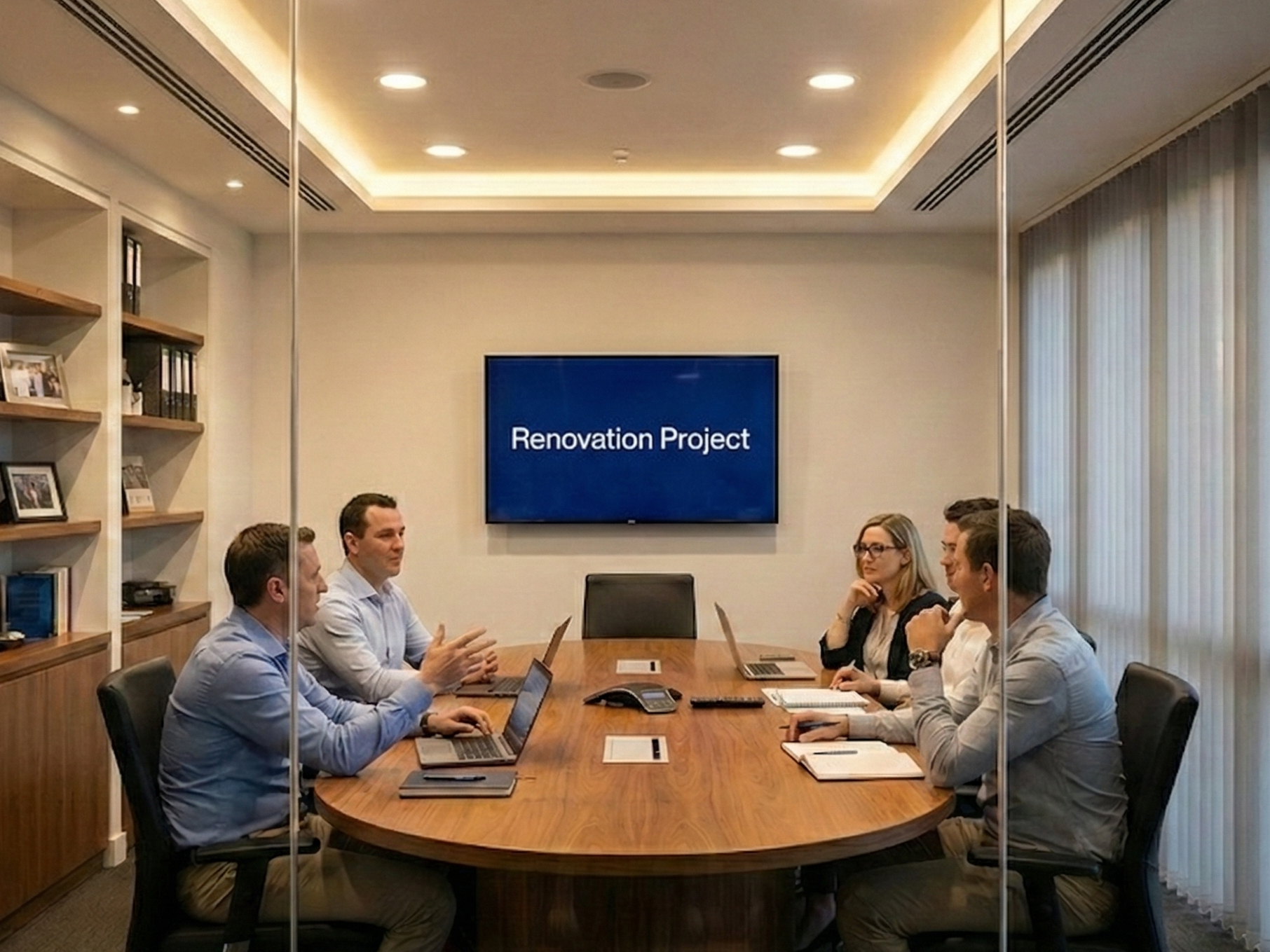
Example 2: Professional Services – Home Renovation Firm
(Construction company, Interior design studio, Architecture firm, Installation company, Film production studio, Event agency, Brand agency, Photography & Video studio, Cleaning firm, etc.)
Scenario: Project-based workload, shifting demands, and unclear cost structure
A home renovation company with 20-30 team members (incl. part-time contractors) manages projects that vary a lot – from one-day tasks to multi-month construction work. Their workload is highly uneven, making it difficult to:
- Know when to bring in additional contractors
- Avoid overloading existing staff or over-promising timelines
- Maintain minimum operational cost while ensuring quality delivery
- Plan tool and material purchases or leases across unpredictable project cycles
- Understand their true cost structure
- Gain a clear quarterly and yearly view of profitability and earning trend
How we Help:
- Develop an Operational Capacity Model to visualize workload across teams and projects, showing project progress, and when additional staff, tool, material are needed
- Create a Cost & Profitability Model that consolidates material cost, labor hour, and business overhead into one simple, monthly view
- Build a Budget Model to plan staffing, cashflow, and inventory purchases ahead of time.
- Conduct Quarterly Reviews and Yearly Review to highlight project profitability, and operation performance
- Perform a Product & Service Audit for earning and productivity optimization, ensuring teams follow consistent procedures from planning to delivery
Outcome:
The firm gains clear visibility of their cash flow and cost by category, reduced unnecessary contractor costs, and reduced project planning time by 30%. Material and tool purchases and leases more efficiently reduced cost by 10%. The management received a clear overview each quarter, which enable them make more balanced operations and project planning.
Example 3: SaaS & Tech – Fin-tech Startup
(Game studio, App development companies, API-first startup, B2B software agency transitioning to product, Marketplace platform, AI tool startup, Edtech platform, HealthTech software, etc)
Scenario: Founder-led SaaS team preparing for investment and rapid growth
A founder-driven fin-tech startup with 10 remote employees has launched a successful product and is generating steady revenue. With new investment offers on the table, they plan to move into a fixed office, and double their team size. They want clear, investor-ready insights and strategic roadmap to get the funding, and they need to understand their customer journey, calculate LTV, identify cross-sell and upsell opportunities, and shift their brand from “startup mode” toward a more structured corporate identity. Currently, they are facing following challenges:
- Lack of a formal investor-ready report that combines financial, product, and customer metrics
- No clear understanding of LTV, CAC, or customer lifecycle, make it harder to further plan acquisition & retention strategy and product improvement
- Uncertainty about cross-sell and upsell opportunities across user segments
- No roadmap for how to scale from a small scale startup into a structured, process-driven organisation
- Need a budget model to plan hiring, and other operational costs
How we Help:
- Build a complete LTV/CAC Model with segmented insights into churn, retention, and user value
- Develop a Budget Model for the founder tracking their pace and profitability
- Perform a Customer Journey & Cohort Analysis to reveal upsell and cross-sell potential
- Create an investor-ready Quarterly and Yearly Review with product metrics, financials, and growth story
- Develop a Roadmap & Scenario Investment Case for company upscaling and investment plan
- Provide Operation Advisory guiding mature internal process, reporting structure, organisation structure
Outcome:
The company secures a clear, compelling narrative for investors, backed by robust metrics and budget setup. The team gains visibility into customer value, growth levers, and operational needs, enabling confident decisions about hiring, scaling, and expansion. With structured reporting and professional roadmap, the company transitions from a fully remote startup into a focused, scalable SaaS organisation ready for its next chapter


Example 4: E-commerce & Retail – Boutique Furniture Brand
(Home goods brand, Fashion brand, Beauty & Personal care brand, Pet store, Hobby & Specialty retail, Sports & Outdoor store, etc)
Scenario: Established brand plans to scale both B2C and B2B online and offline
A boutique furniture brand with a strong physical showroom has launched an e-commerce store while maintaining steady offline sales. Online performance, however, remains modest despite running paid social media campaigns, and media production. Managing inventory across channels is challenging, content production and customer success management feels overwhelming, and marketing costs are rising without clear results. They feel that they have missed lot of promotion sales opportunity. At the same time, the brand wants to expand into B2B to increase revenue. They are facing following challenges:
- Difficulty managing inventory for both online and offline sales
- Unclear ROI from social media channels and brand investment, with rising costs
- Lack of a forecast for future demand, promotions, or buying cycles
- Uncertainty on how to approach B2B business development opportunity
- No experience producing consistent, effective content
How we Help:
- Develop a clear Performance Dashboard for all marketing & sales channel performance
- Build a Sales Forecast & Budget Model combing online, offline, and seasonal (Black Friday, Back to School, Boxing Days, etc) demand
- Develop a MMM Model to measure marketing efficiency, and determine which channels worth for more investment
- Provide Content Strategy Advisory and AI & Automation Advisory to reduce production cost and remain the consistency
- Develop a B2B Investment Case assessment, given by different price and order, review potential revenue and margin impacts
Outcome:
The brand gains a unified view of how online & offline sales contribute to revenue, enabling smarter inventory planning. Meanwhile, a clear marketing channel performance tracking dashboard allows management understand ROI performance and brand matrix at the same place. Online sales begin to grow steadily as budgets shift toward high-performing channels and clearer marketing strategy. With a structured B2B model, leadership can easily calculate their earning towards to different B2B orders and make confident deals. The brand also streamline the operational process, using various of automation tools providing consistent content in house with less time and cost.
Example 5: Hospitality & Events – Spa Hotel
(Conference center, Resorts, Restaurant, Catering company, Attractions, Event spaces, etc)
Scenario: Seasonal Impact hotel wants grow revenue by better retention & pricing strategy and package offer
A seaside spa hotel with a fine-dining restaurant enjoys strong sales during summer, but struggles with low occupancy in winter. They want to offer more attractive packages for Christmas, New Year, corporate retreats, and weddings – yet they lack clarity on actual seasonality impact, optimal pricing, and which customer segments to target. Although they are using dynamic pricing, they do not know how much flexibility they can safely apply without hurting demand or revenue. They also aware the amount of recurring customers due to great experience, but they lack of retention strategy to further communicate with them. They are facing:
- Difficult to forecast demand outside peak season
- Unclear price strategy to guide changing range
- No insight into which segments – spa, families, couple, corporate groups, wedding events drive the most profitability
- Not confident to design package with the right discount or value-add
- Marketing spend is reactive, unclear which customer groups convert the best
- Lack of strategy and action for customer retention
How we Help:
- Conduct Customer Segment Insights for finding the main income driver and targeting various offers
- Build a seasonality & demand Forecast Model to quantify high and low periods and predict monthly occupancy
- Create a Pricing Model to identify how much prices and change without losing bookings
- Design a Package Model and a Promotion Model to compare projected margins and competitiveness for special deals and combined package offer
- Offer Marketing Operation Advisory for marketing positioning and retention strategy recommendation based on customer behaviour and seasonal trend
Outcome:
The spa hotel gains a clear understanding of seasonality’s impact and the pricing range through whole year. The team has developed a new retention strategy on SMS & Email communication, which increased their conversion rate by 5%. The customer insights reveal couple visitors are the main revenue driver, therefore, they have design a few new package for couple during holiday. With packages, optimised pricing, and clear customer segmentation, the hotel increases off-season occupancy, and builds new revenue streams through corporate retreats during low season.